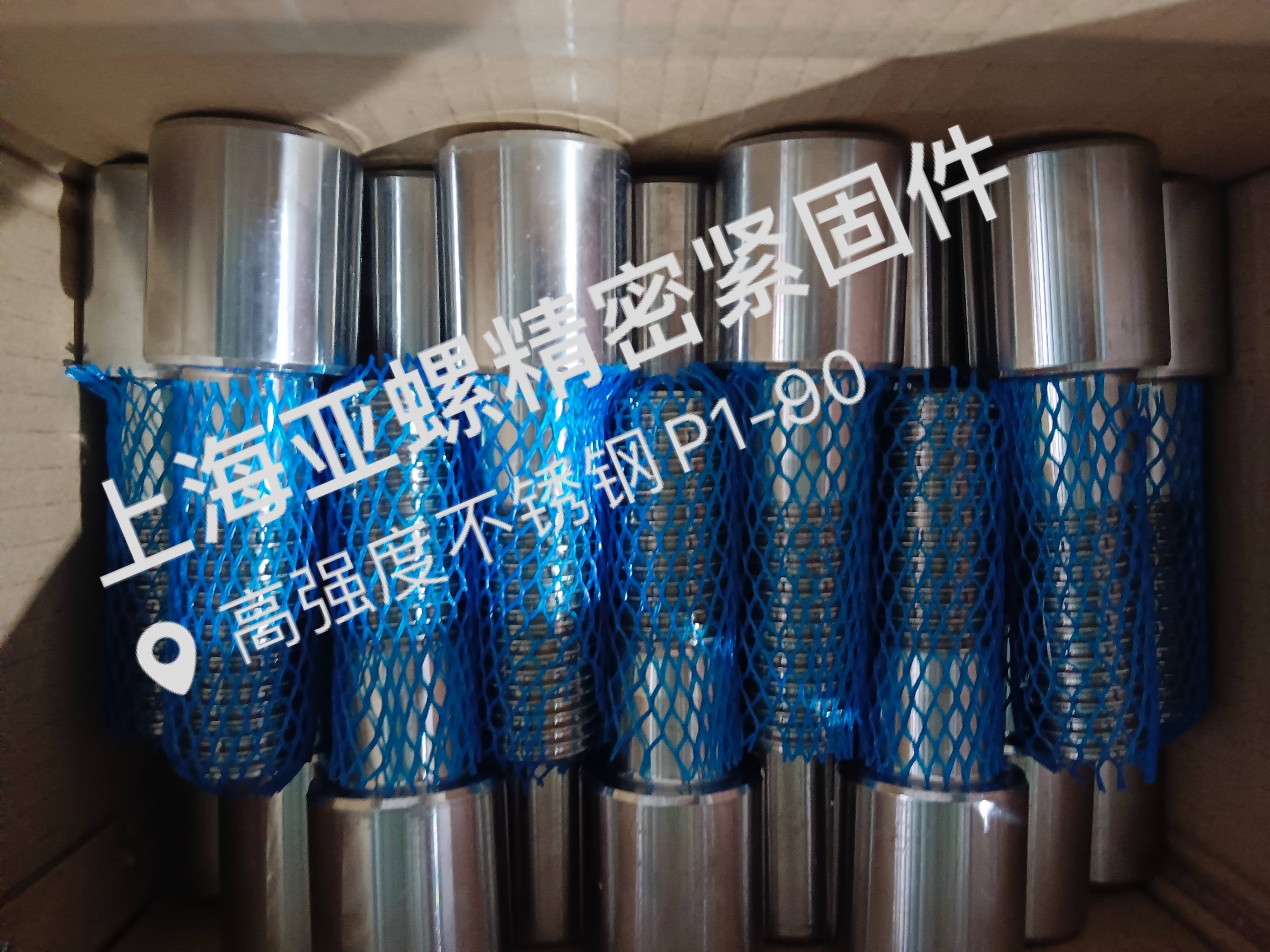

Processing method for high-strength stainless steel P1-90 bolt: After solution treatment, it becomes an unstable austenite structure with good plasticity, toughness, and processability. After adjustment, the austenite precipitation and carbonization phenological components change, and then after martensitic transformation treatment, most of the structure is transformed into low-carbon tempered martensite with good toughness. This state is the service state of steel and has good medium temperature mechanical properties.
Ice transformation cooling treatment: a treatment that reaches a certain temperature within a certain period of time and is maintained for a period of time to determine the next step for strengthening or aging treatment. Semi austenitic precipitation hardening stainless steel is defined as a high-strength stainless steel with a solid solution structure matrix of austenite (beneficial for forming and welding), which is transformed into martensite after adjustment heat treatment and/or cold treatment, and further strengthened by the precipitation of intermetallic compounds or carbonitrides through aging treatment.
Physical properties of high-strength stainless steel P1-90 bolt: Density: 7780 kg/m2 Melting point: 1400-1440 ℃ Specific heat capacity: 502J/(kg ·℃) The welding process of this steel can be the same as that of austenitic stainless steel.
Disadvantages of high-strength stainless steel P1-90 bolt fasteners: In order to achieve good welding efficiency, the welded parts after solution annealing should first undergo solution treatment, followed by adjustment and aging treatment. The carbon content ratio of this material is 0, so it has no hardness or is very low after quenching.
Characteristics and Applications of High Strength Stainless Steel P1-90 Bolt: High strength stainless steel P1-90 bolt is an austenitic martensitic precipitation hardening stainless steel developed based on 18-8CrNi, also known as controlled phase transformation stainless steel. If the same welding rod as the base material is used for welding, a large amount of δ ferrite and P1-90 non-standard fasteners will appear in the weld, causing a decrease in the toughness of the weld. Therefore, appropriate chromium reduction or nickel addition can be carried out in the welding rod.


Copyright © Shanghai ATM Precision Fasteneing Technology Co., Ltd. specializes in producing fasteners
and mechanical components made of alloy steel, stainless steel, special alloys, high-temperature alloys,
and other materials. Welcome to inquire!
沪ICP备11050003号
 Shanghai Public Security Registration
No. 31011402010442
Shanghai Public Security Registration
No. 31011402010442