Yaluo (ATM) customizes special fasteners -06Cr19Ni10/S30408/ASTM304/UNS S30400/1.4301 bolts/nuts. We provide various high-precision, high-quality bolt and nut fasteners for customized processing according to drawings, with good corrosion resistance.
Fastener Name: 06Cr19Ni10/S30408/ASTM304/UNS S30400/1.4301 Bolt/Nut
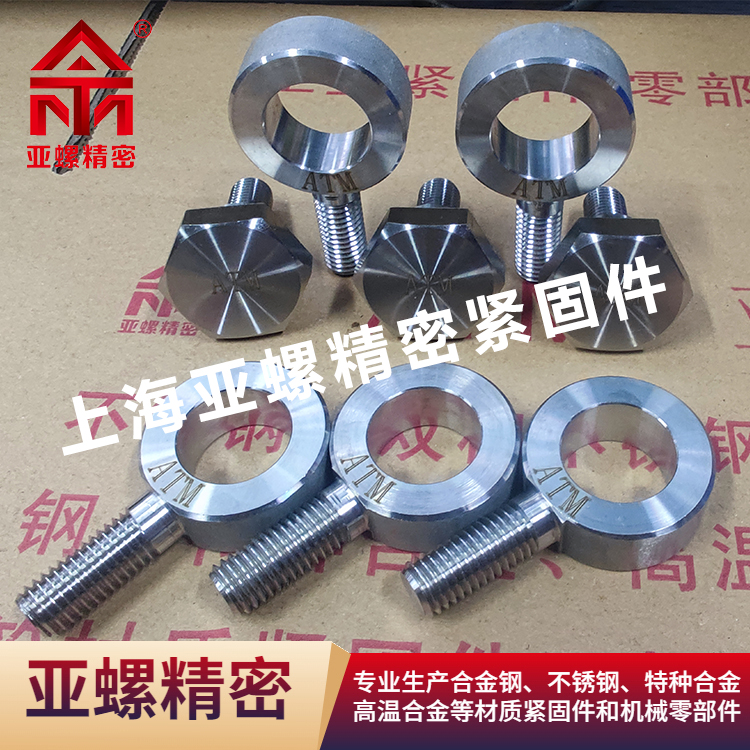
Brand: China: GB 06Cr19Ni9 bolts and nuts, ISC S30408 bolts and nuts; USA: ASTM304 bolts and nuts; UNS S30400 bolts and nuts; Germany: 1.4301 bolt nut
Corresponding standard: GB/T 20878-2007 Stainless steel and heat-resistant steel grades and chemical composition
Fastener classification: Austenitic stainless steel
Fastener performance: Corrosion resistance
Fastener label: Austenitic stainless steel
Fastener performance:
304 stainless steel is a common material in stainless steel, with a density of 7.93 g/cm3, also known as 18/8 stainless steel in the industry. As a widely used steel, it has good corrosion resistance, heat resistance, low-temperature strength, and mechanical properties; Good hot workability such as stamping and bending, without heat treatment hardening phenomenon (operating temperature -196 ℃~800 ℃). Corrosion resistance in the atmosphere, if it is an industrial atmosphere or heavily polluted area, it needs to be cleaned in a timely manner to avoid corrosion. Suitable for food processing, storage, and transportation. Has good processing performance and weldability. Plate heat exchangers, corrugated pipes, household items (Class 1 and 2 tableware, cabinets, indoor pipelines, water heaters, boilers, bathtubs), automotive parts (windshield wipers, mufflers, molded products), medical equipment, building materials, chemicals, food industry, agriculture, ship parts, Xiaomi phones, etc. 304 stainless steel is a nationally recognized food grade stainless steel.
The rusting phenomenon of 304 stainless steel material may be caused by the following reasons:
chloride ion
Chloride ions are widely present, such as salt/sweat stains/seawater/sea breeze/soil, etc. Stainless steel corrodes rapidly in the presence of chloride ions, even surpassing ordinary low-carbon steel. So there are requirements for the use environment of stainless steel, and it needs to be regularly wiped to remove dust and maintain cleanliness and dryness. There is an example in the United States: a company used an oak container to hold a solution containing a certain chloride ion. The container had been in use for nearly a hundred years and was planned to be replaced in the 1990s. However, due to the lack of modern oak materials, the container was replaced with stainless steel and leaked due to corrosion 16 days later.
solution treatment
The alloy elements have not dissolved into the matrix, resulting in low alloy content and poor corrosion resistance in the matrix structure.
intergranular corrosion
This material, which does not contain titanium or niobium, has a tendency towards intergranular corrosion. Adding titanium and niobium, combined with stabilization treatment, can reduce intergranular corrosion. A high alloy steel that can resist corrosion in air or chemical corrosive media. Stainless steel is a type of steel that has a beautiful surface and good corrosion resistance, and does not require surface treatment such as plating to exhibit its inherent surface properties. It is commonly used in various types of steel and is commonly referred to as stainless steel. High alloy steels such as 13 chromium steel and 18-8 chromium nickel steel are representative of their performance. From a metallographic perspective, stainless steel contains chromium, which forms a very thin chromium film on the surface. This film isolates it from the invading oxygen inside the steel, providing corrosion resistance. In order to maintain the inherent corrosion resistance of stainless steel, it must contain at least 12% chromium. Used in situations where welding is required. The lower carbon content minimizes the precipitation of carbides in the heat affected zone near the weld, which may lead to intergranular corrosion (welding erosion) of stainless steel in certain environments.
surface phenomenon
Surface mark phenomenon refers to the occurrence of line or point like concave mark defects on the surface of 304 stainless steel after deep processing or grinding of processed products.
Reason: There are foreign objects on the surface and mold surface, and scars on the edge pad surface.
Countermeasure: Remove foreign objects and scars before processing, and also remove orange peel by thorough grinding.
The orange peel phenomenon refers to the phenomenon where the surface of 304 stainless steel molded products produces a shape similar to orange peel during grinding or other processes.
Reason: Insufficient grinding, the larger the processing, the more severe the orange peel, the coarse grain size of the raw material, and softening during heat treatment.
Countermeasure: Fully grind the deep processed products, select suitable heat treatment conditions, and control the grain size of the raw materials.
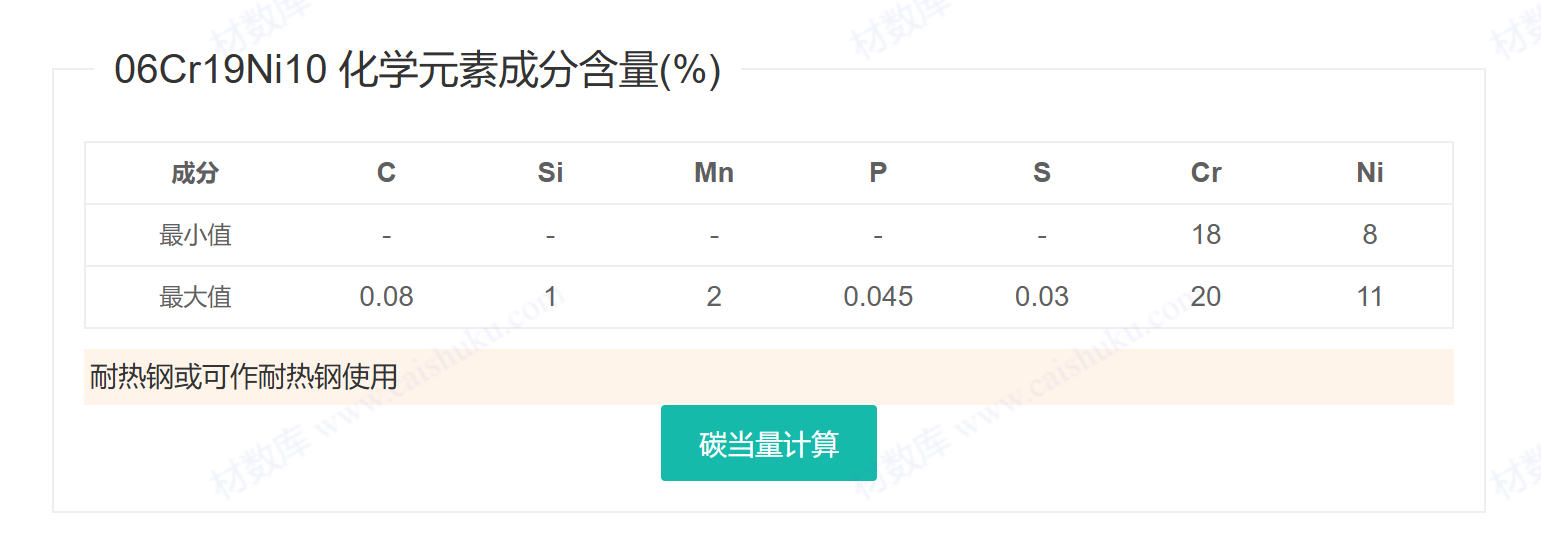
06Cr19Ni10/S30408/ASTM304/UNS S30400/1.4301 Bolt/Nut Chemical Element Composition Content (%)
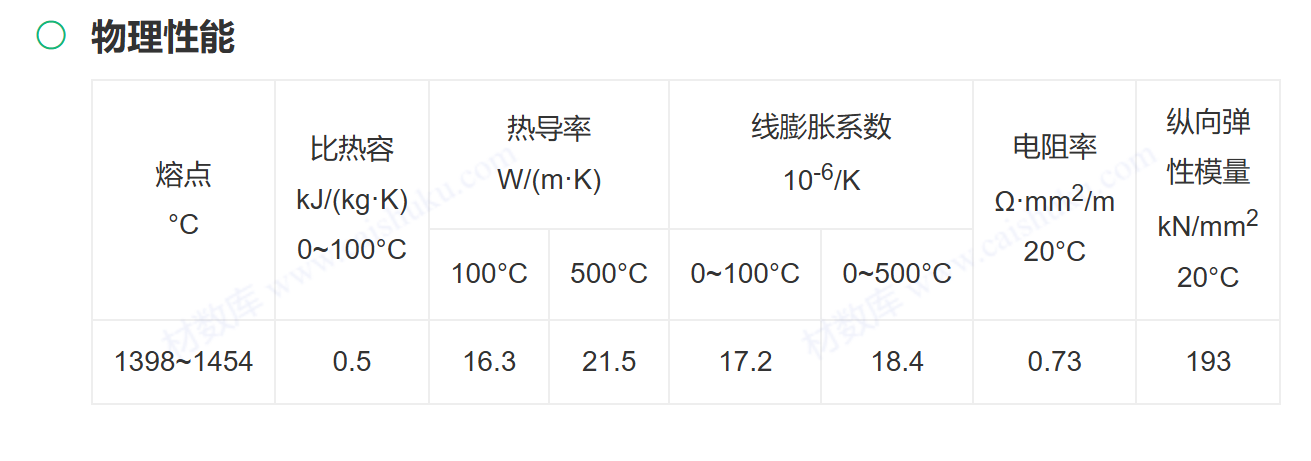
06Cr19Ni10/S30408/ASTM304/UNS S30400/1.4301 bolts/nuts Physical properties:
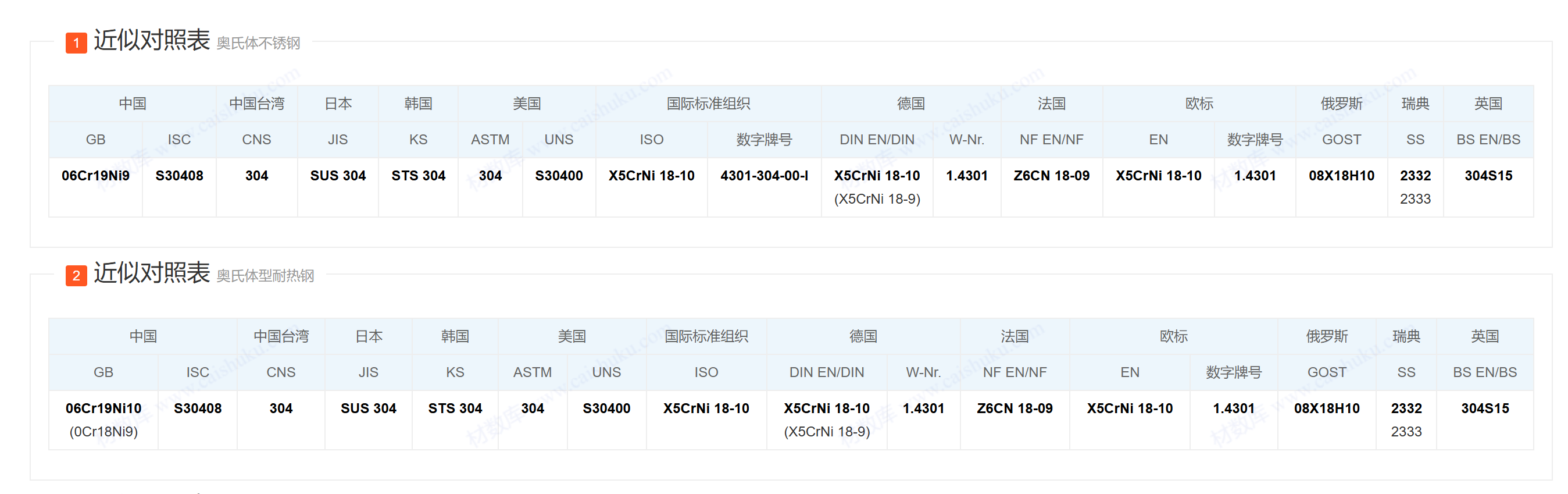
Comparison table of approximate bolt/nut grades for 06Cr19Ni10/S30408/ASTM304/UNS S30400/1.4301:


Copyright © Shanghai ATM Precision Fasteneing Technology Co., Ltd. specializes in producing fasteners
and mechanical components made of alloy steel, stainless steel, special alloys, high-temperature alloys,
and other materials. Welcome to inquire!
沪ICP备11050003号
 Shanghai Public Security Registration
No. 31011402010442
Shanghai Public Security Registration
No. 31011402010442